WW2 HistoryBook World War II historical images. WW2 book reviews and movie reviews.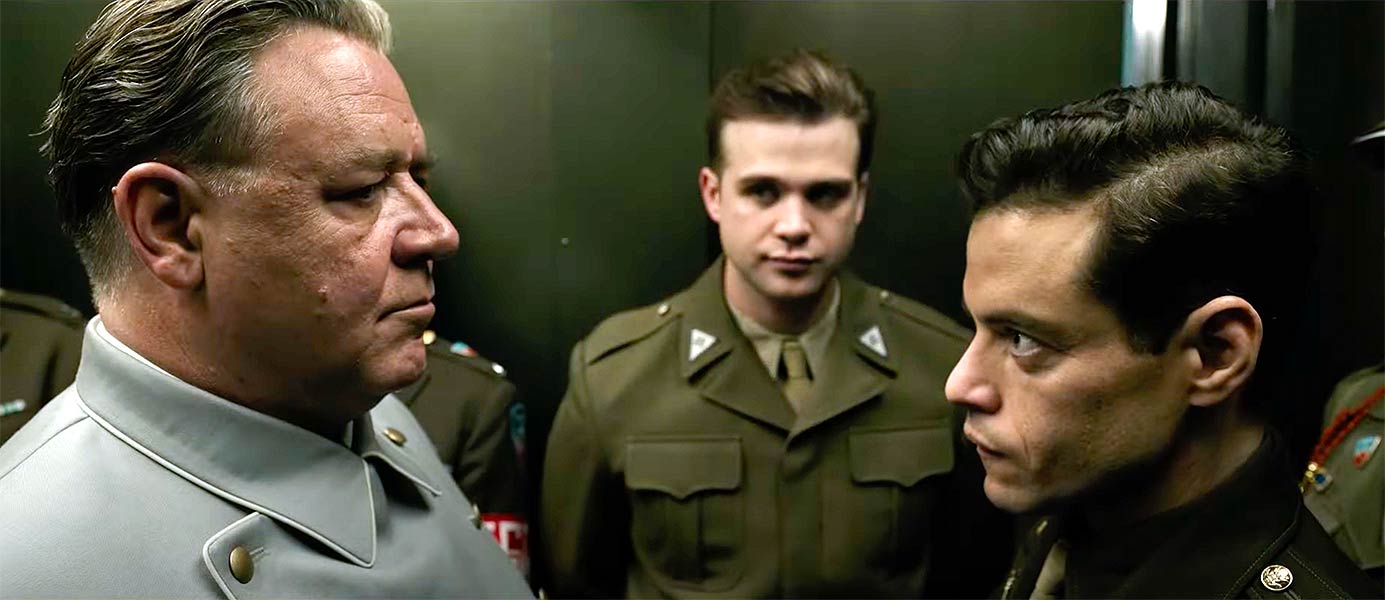
Nuremberg (2025), directed by James Vanderbilt, is a historical drama based on “The Nazi and the Psychiatrist”, a book by Jack El-Hai about the relationship between Hermann Göring (portrayed quite well by Russell Crowe) and Douglas Kelley (Rami Malek), the psychiatrist tasked with evaluating the prisoners during the first months of the famous Nuremberg trials of 1946.
While the movie does cover the trials themselves, is does so quickly and superficially. Its focus lies on the aforementioned connection between Hermann Goring and Douglas Kelley. Indeed, this is a tantalizing approach. Will we get to learn how and why the Nazis came to be?
This movie had a fantastic chance to dive deep into the psychological intricacies of the leading figures of the Third Reich, and for the first 90 minutes it teases this idea, but eventually it switches direction and falls way short of the expectations it created. It’s like they got scared!
The “why” and the “how” are the important questions which pretty much every piece of cinematography and literature of World War 2 avoids like the plague. And no wonder, because the answer has been given by Douglas Kelley himself in his book: “There is no such thing as a particular Nazi psychology. They are just like us – creatures of their environment.” Kelley told us we are all capable of doing the very same things they did. But this, of course, is an answer no one wants to hear, and we can not be surprised that Kelley’s publication not only flopped, but was virtually banned in the USA.
As such, the movie steers decisively away from these thought provoking explorations, and in the second half it veers towards the safe theme of underlying the moral high ground and righteousness of the Allies, like a thousand other films before it. The ending offers some redemption, but too little, too late.
Indeed, it is easier to label Nazis as simple evil creatures, in contrast with the goodness and virtue we possess. And if they were just demons, surely nothing like World Word II can ever happen again. Only it can. And, because we refuse to look at the truth, it most definitely will. Fact is, we don’t really care about what happened, if we’re being honest 🤫. We just want to feel like the good guys. That’s why we take selfies at Auschwitz, but make sure to tell how devastated we were by the emotional experience.
Nuremberg is an entertaining watch, well acted and produced, and for an artistic movie made by Hollywood it is reasonably faithful to historical facts – although Karl Donitz DID NOT “condone the murder of prisoners of war”, and the portrayal of renowned psychologist Gustave Gilbert (who worked together with Kelley at Nuremberg) as an idiot is embarrassing. These inaccuracies hurt Nuremberg’s credibility, but it could have been worse, just see the historical calamity which is Hitler’s Circle of Evil!
Overall, it is not a memorable movie, nor does it bring anything new to the table, but if you watch it for what it is, chances are you will enjoy it. Alternatively, if you want a more complex production which has the courage to approach the difficult questions, Tokyo Trial (2016) – the story of the International Military Tribunal for the Far East is what you should be looking at.