WW2 HistoryBook World War II historical images. WW2 book reviews and movie reviews.
 Krakow is being buried in snow, the bus has broken down, and it’s freezing outside. But I suppose visiting Auschwitz shouldn’t be particularly comfortable, so I try to appreciate this fact. My current discomfort can easily be tolerated.
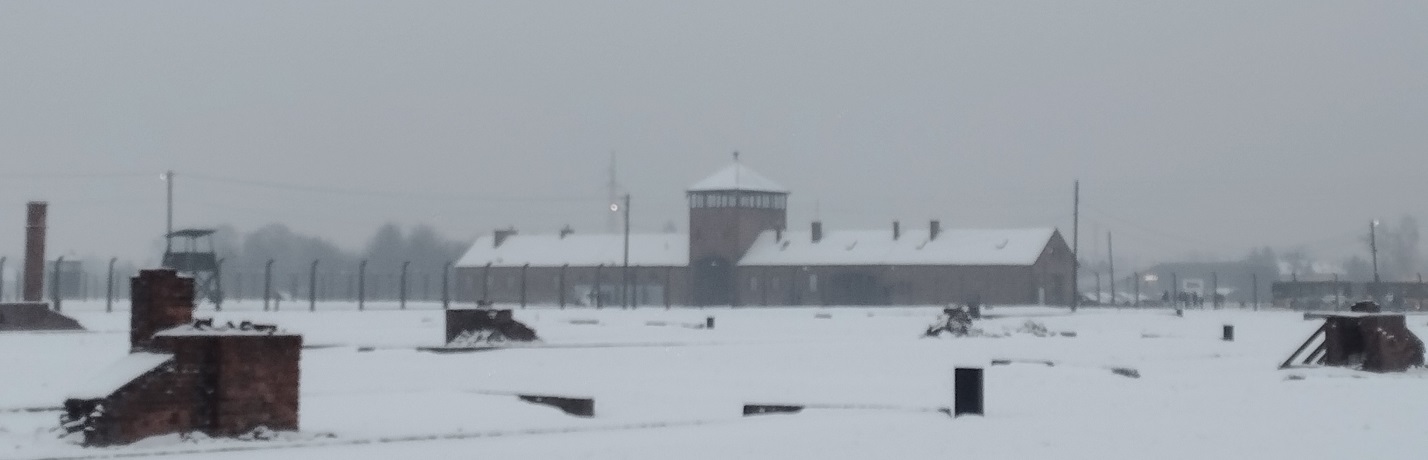
I arrive at Auschwitz around 11 AM, so I have three hours to spare, as non-guided tours are not allowed before 14:00. I grab a snack and a cup of coffee from what feels like the most expensive restaurant in the world, then step outside to light up a cigarette. Although there is a total smoking ban inside and around the Auschwitz complex, there’s heavy puffing going on outside the museum, so I decide to blend in. It feels quite surreal that I am finally here.
The time has come for my visit and I join a small queue, which surprises me, as I knew Auschwitz attracts around 2 million visitors annually – but it seems that there’s only a couple guided tours waiting with me – maybe 50 people. Surely the cold and the heavy snowfall have deterred most tourists. It’s barely 14:10 as I pass through security and am on my way. You’re only allowed water with you, but I smuggle in a chocolate bar. Another black mark on my reputation.
The Auschwitz concentration camp is composed of two sections: Auschwitz I, the main labor camp, and Auschwitz II-Birkenau, which served as an extermination camp. There used to be another work subcamp, Auschwitz III-Monowitz , but it is no longer standing and not part of the tour.
Ascending through the corridor leading to the camp, we can hear a recording of the victims’ names being played softly on a loop, echoing through space.
The tour starts at Auschwitz I (a bus takes you to Auschwitz II-Birkenau once you’re done), where we encounter the famous “Arbeit Macht Frei” entry gate.
Immediately I’m struck by people taking selfies. It seems incredible, but apparently it’s not. Why do such a thing? Are you going to post this on Instagram, maybe after you recount how emotional this visit was for you? Are the guides really ok with this? You’re not allowed to eat here, yet this seems acceptable. It doesn’t sit right with me. It makes me wonder – do we really care, or do we just like to pretend we do? I have a pretty good idea.
I captured the scenes, but decided not to include them. Maybe I should have.
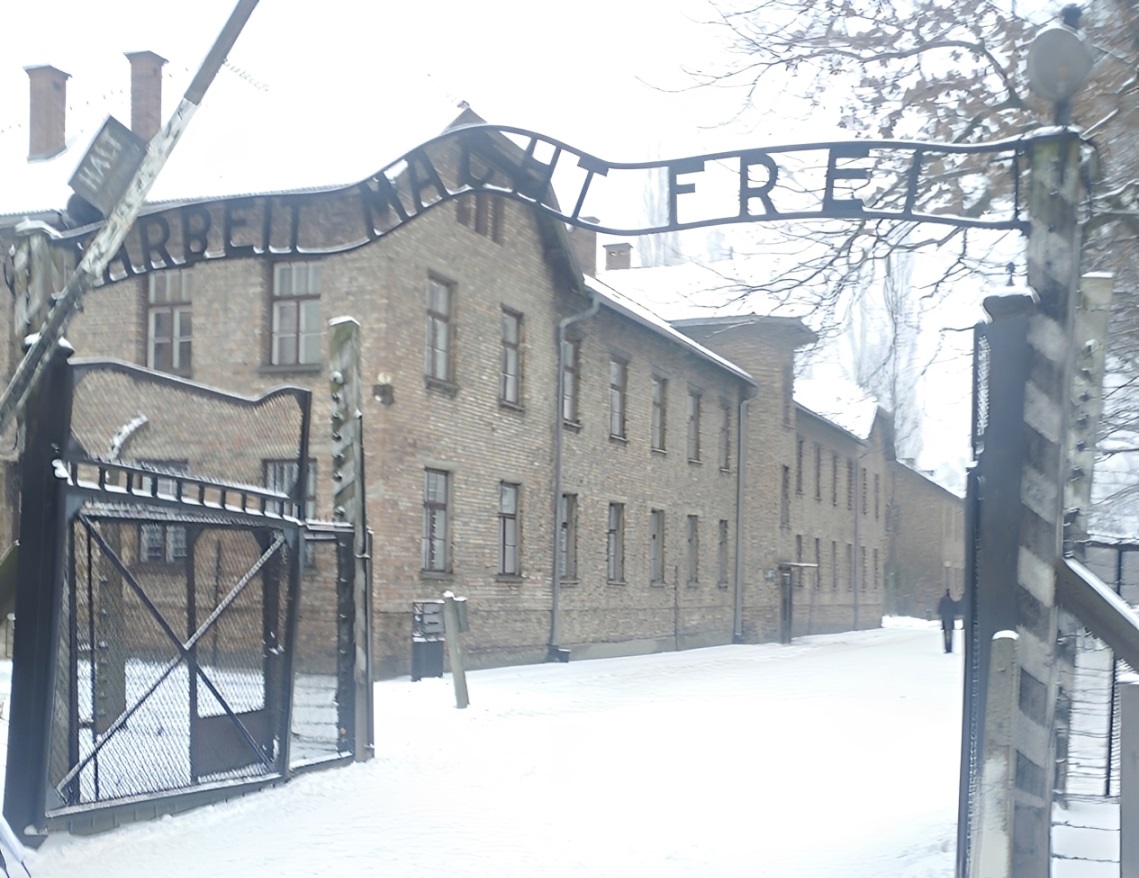
Being aware of the camp’s layout and the events which took place here, I don’t need to read every panel and can move faster, so I separate myself pretty early from the guided tours which entered alongside me.
There’s a sense of order and symmetry. It’s not surprising, really – the Germans are known for this. The buildings are in pristine state.
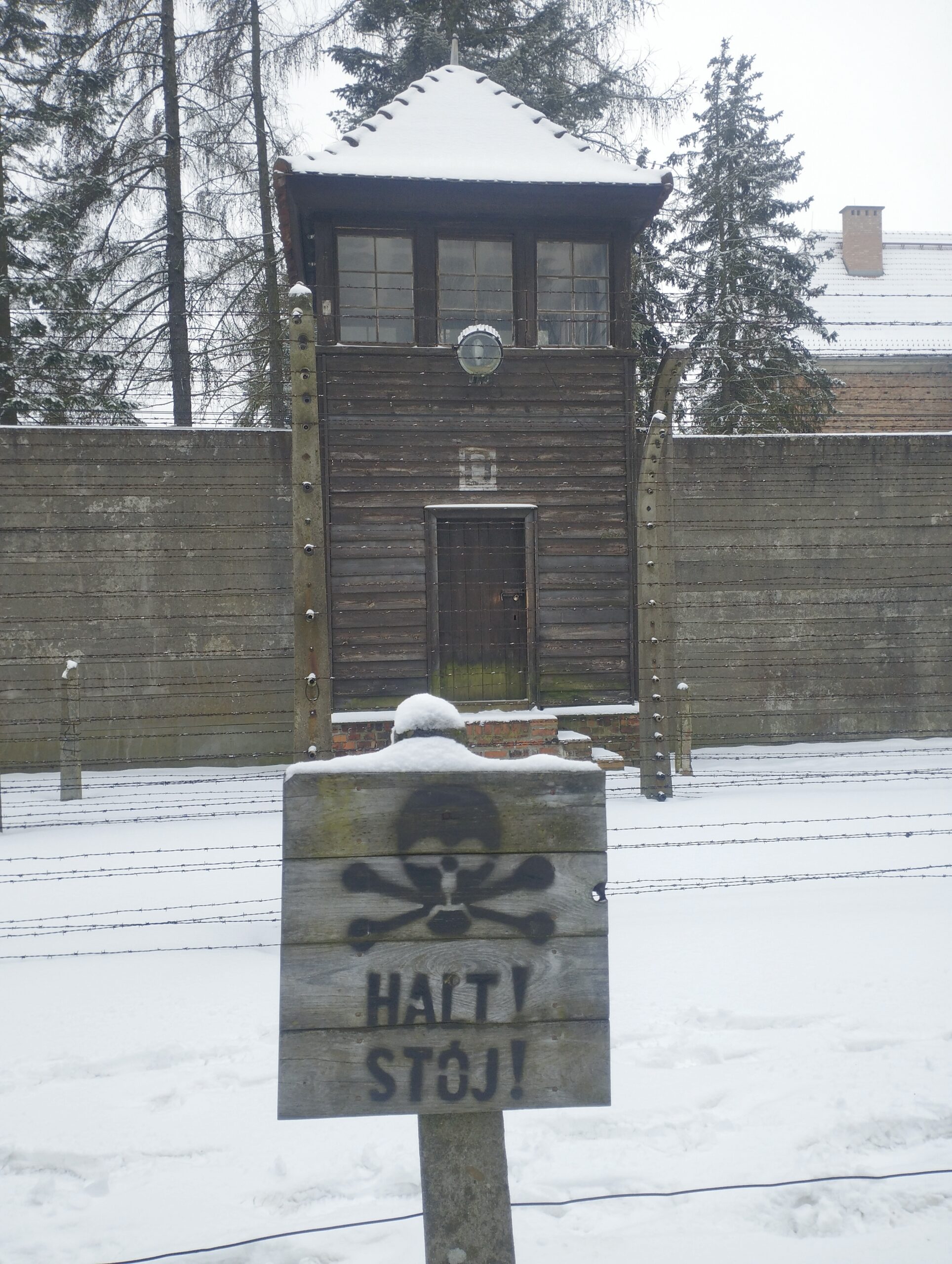
I quickly understand to appreciate the heavy snow and freezing weather. In Spring, with a light breeze, blooming trees and neatly trimmed squares of grass, green all around, it might be difficult to get a sense of the horrors which happened here – because, however it may sound, the place could be taken as aesthetically pleasing if not for the ever-present barbed wire and watchtowers.
In these conditions, though, it feels different. And you have the chance to imagine how being worked to death in dirty rags and wooden shoes must have felt – not that you can ever truly empathize.
I notice the swimming pool, which is hidden to the public. I can sneak to take some pictures, but I decide not to. If they don’t want it shown, I can respect that. I understand it can encourage Holocaust denial.
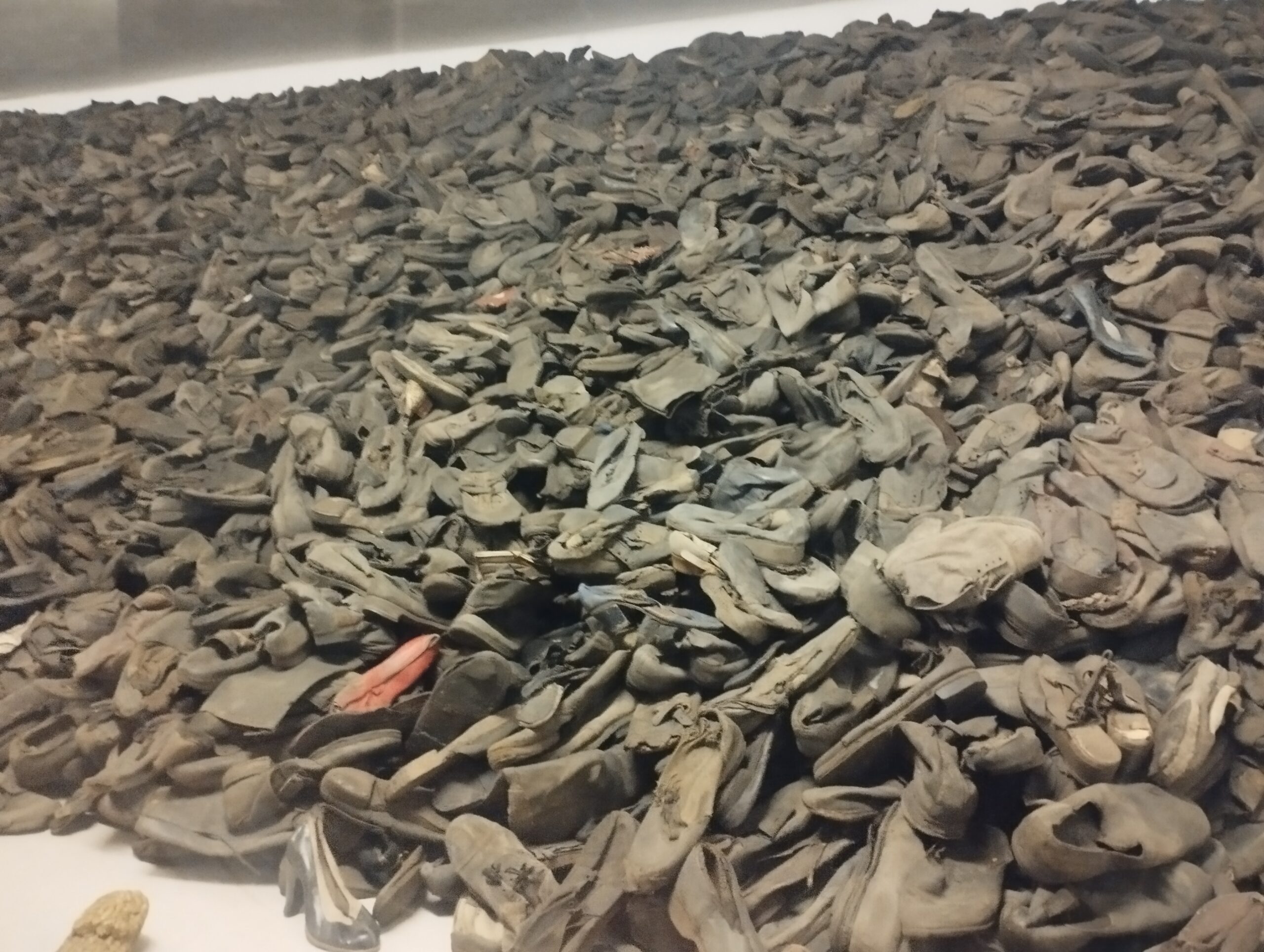
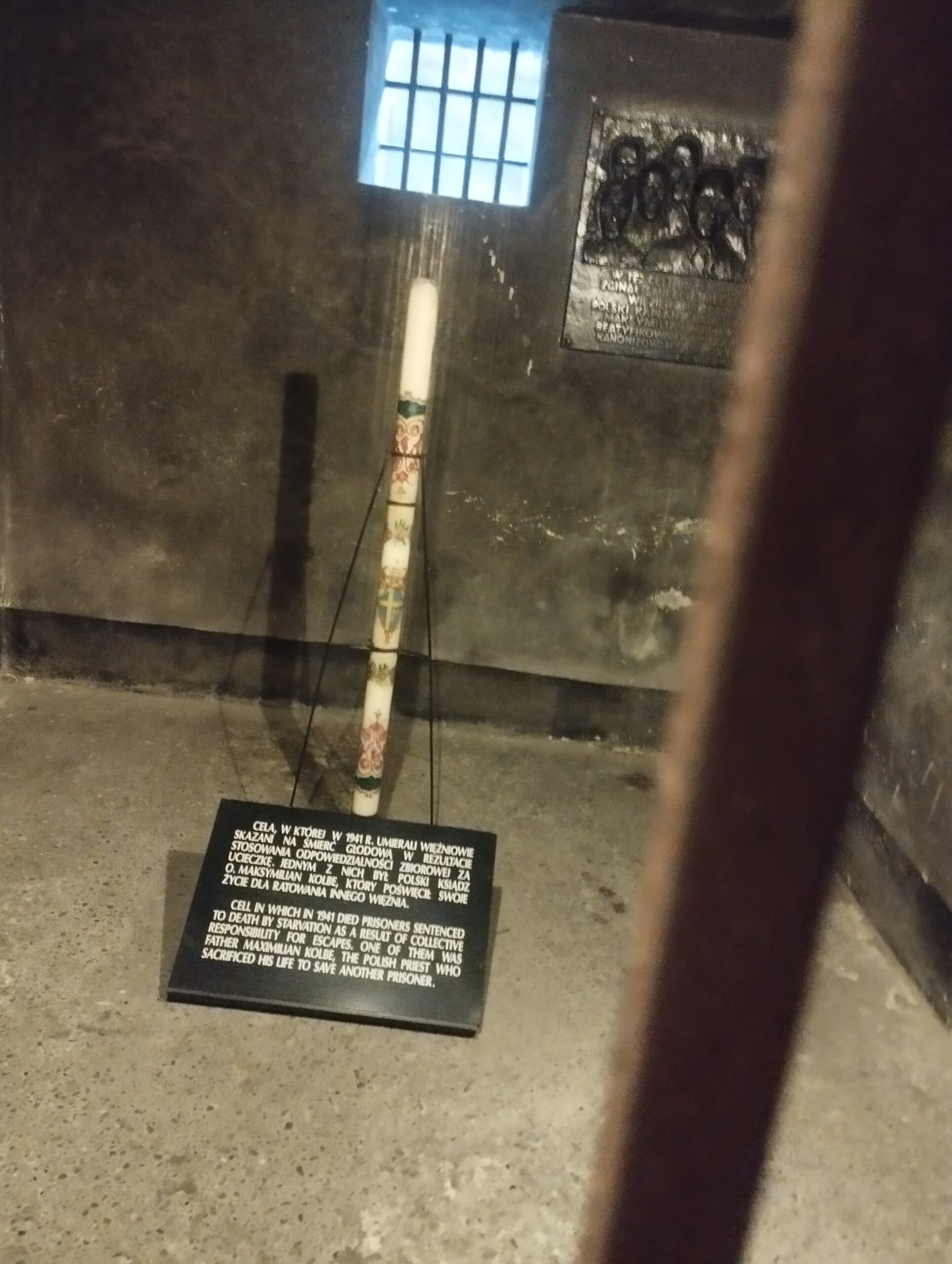
The visit at Auschwitz I consists of walking around the perimeter and exploring the barracks which are open to the public. Inside, you move through different rooms and prison cells, with panels presenting elaborate explanations of the events which occurred in said places. There’s quite a few stories to learn. And then there are exhibitions of the prisoners’ personal belongings. Cans, toothbrushes, shoes, clothes, makeshift items …
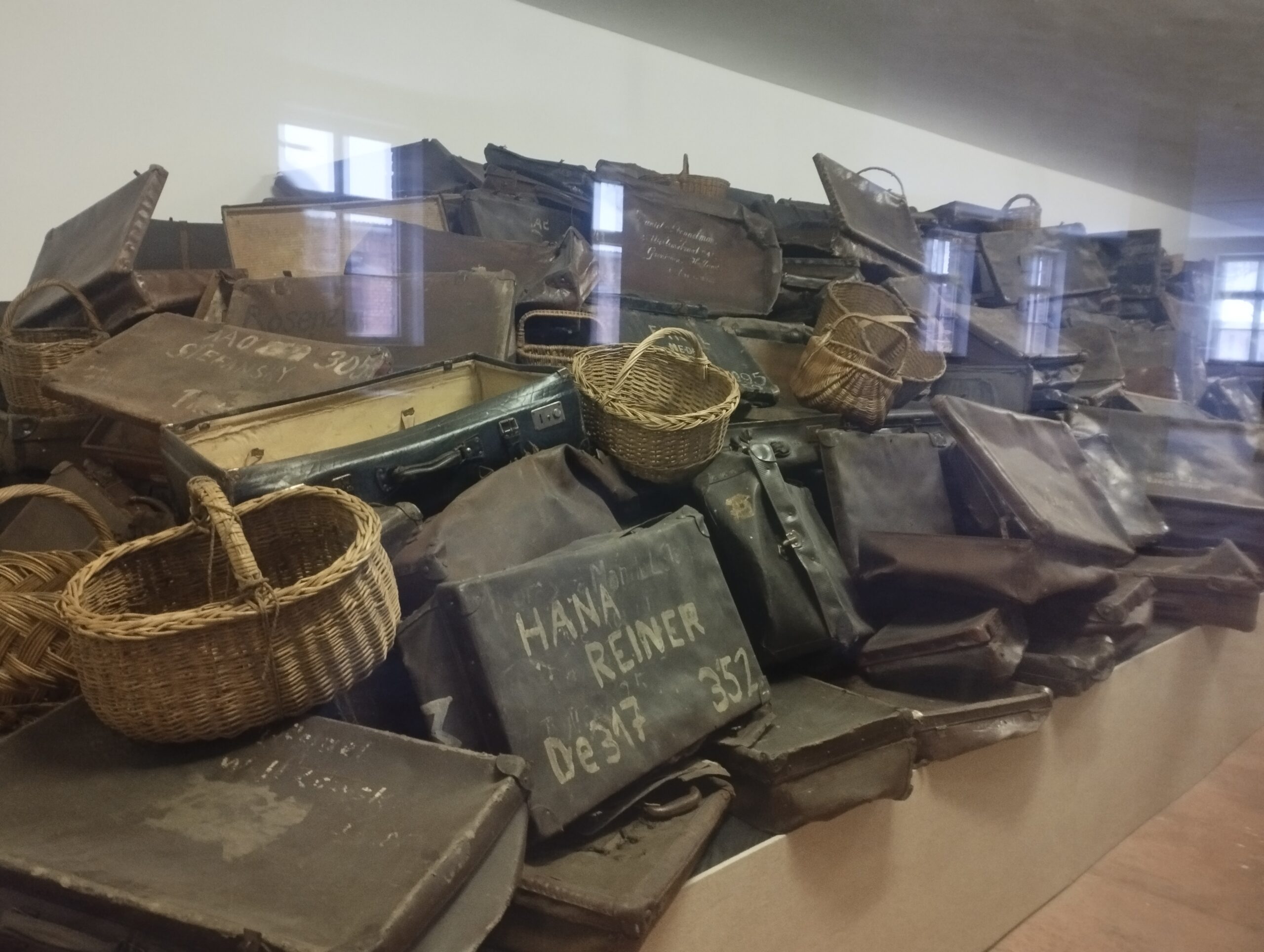
What really hits me though, is seeing all the suitcases – distinctively marked with their owners’ names. These were people with dreams, people hoping for a future. People who loved, and who were loved. They were worried about losing their belongings. They wrote their names to ensure they would be returned.
I imagine the scenes:
“Darling, write our names so they know to give these back to us … write in big letters, so they’ll see …”.
They didn’t know it was all over the moment they stepped onto those trains. It feels quite tragic to think about it in this way.
So I sit with that for a while.
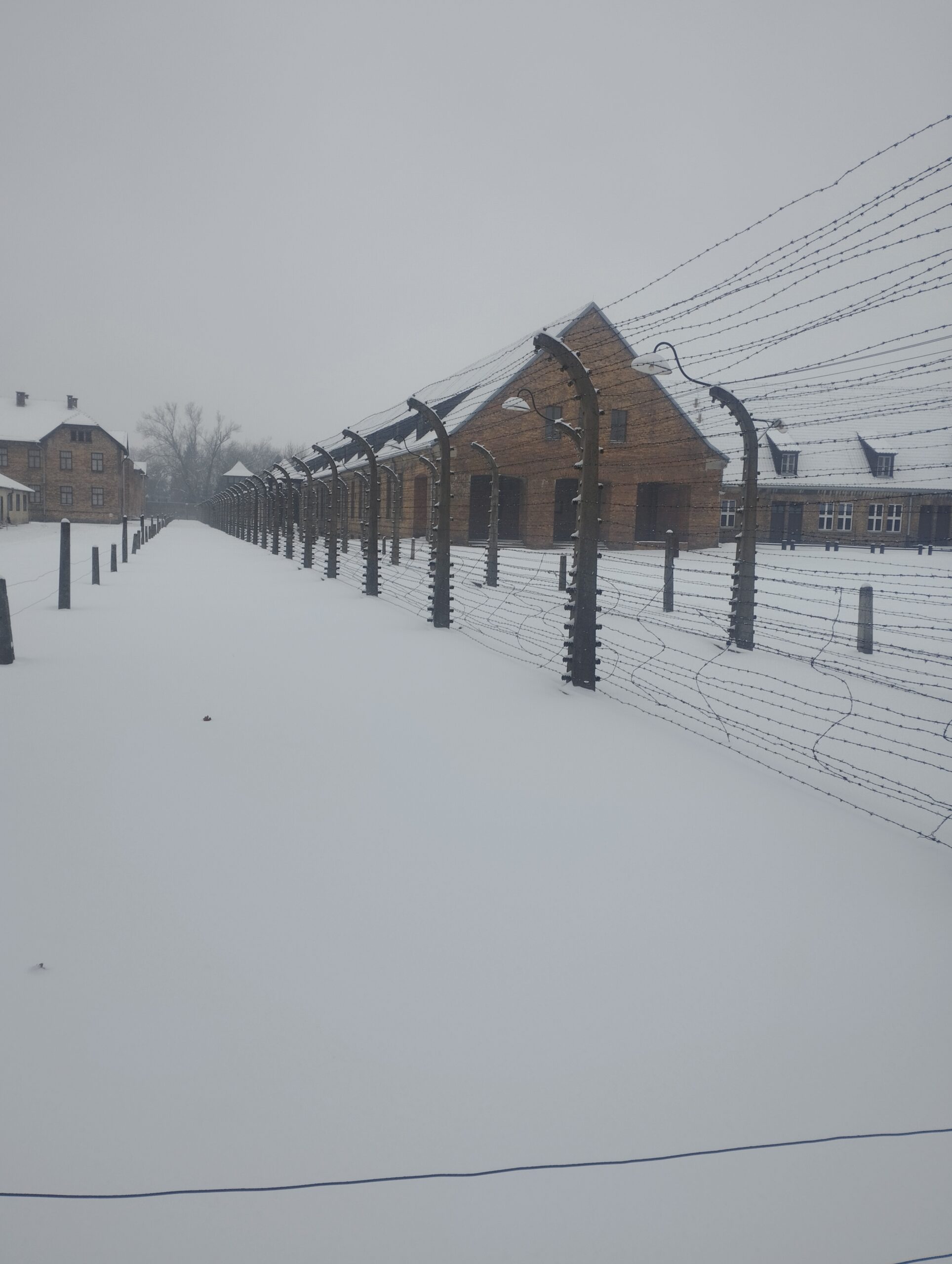
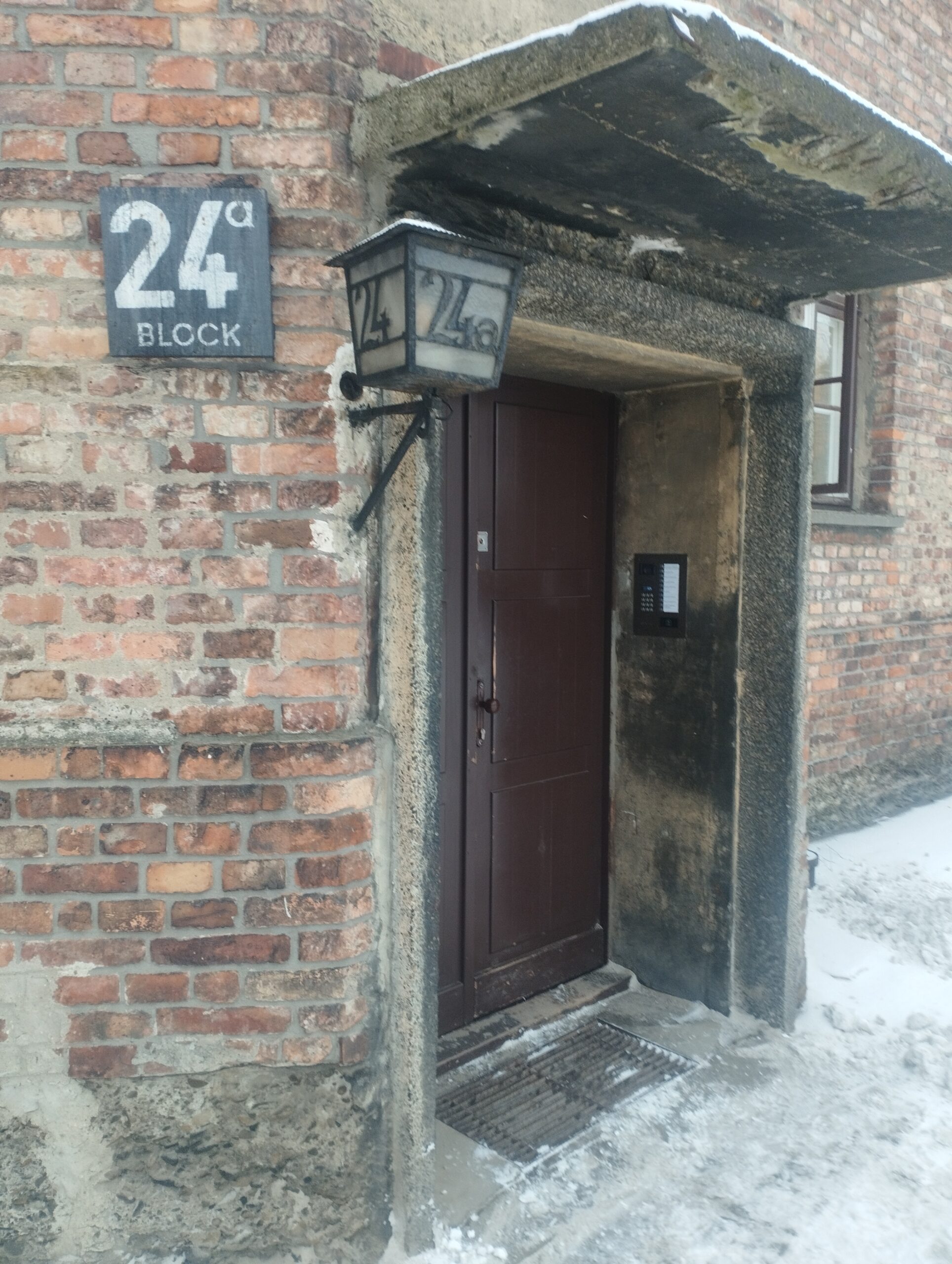
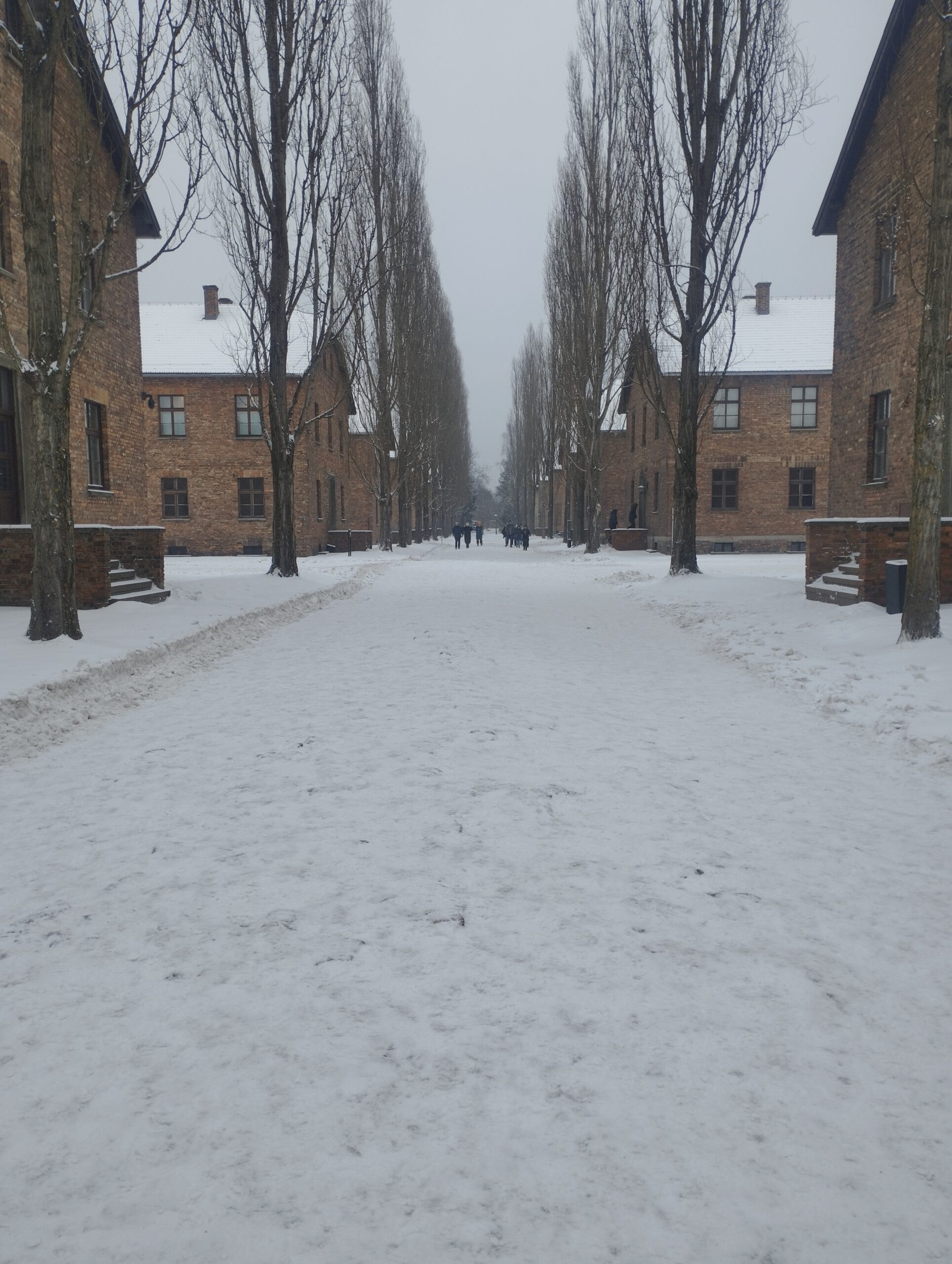
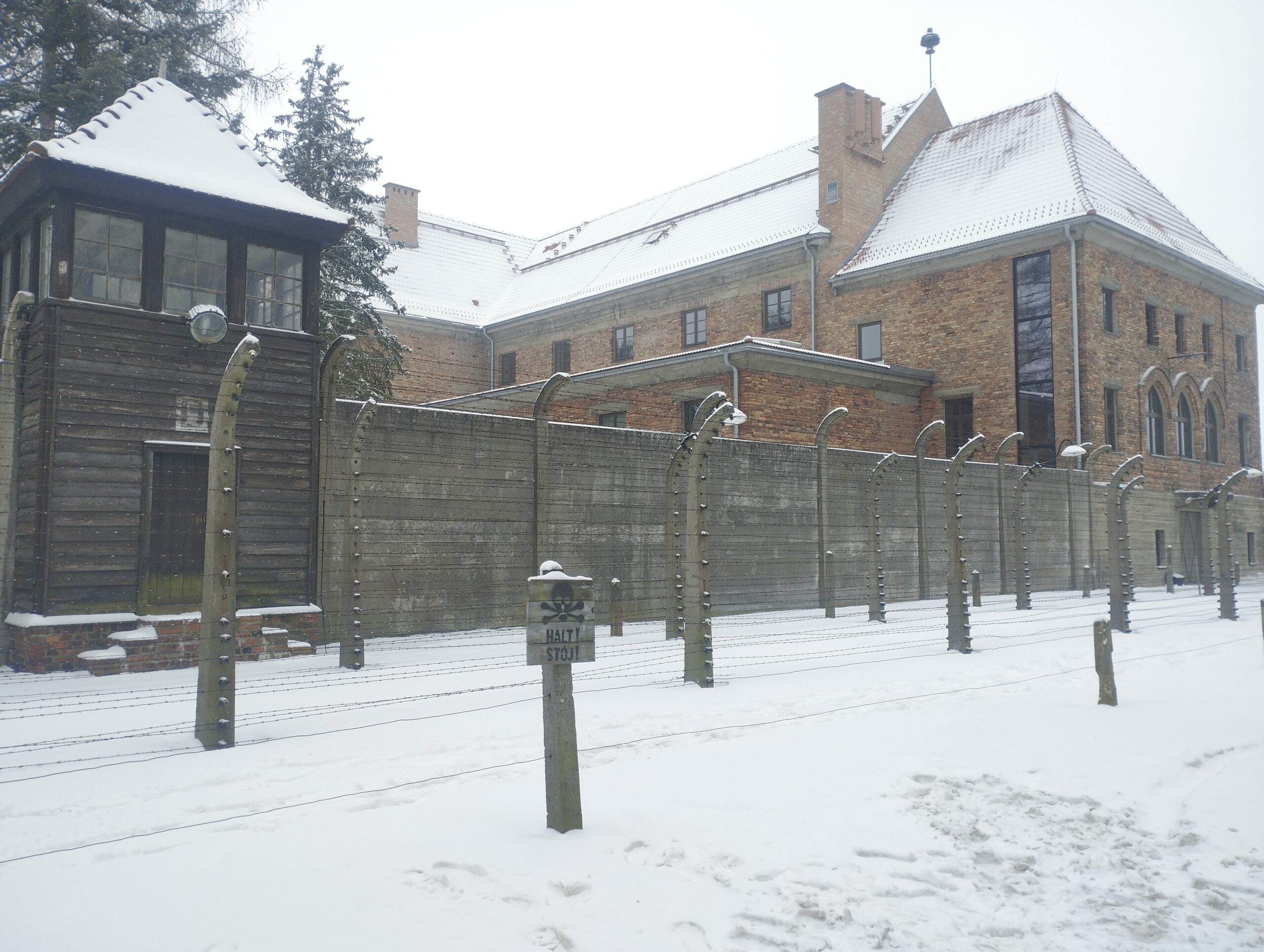
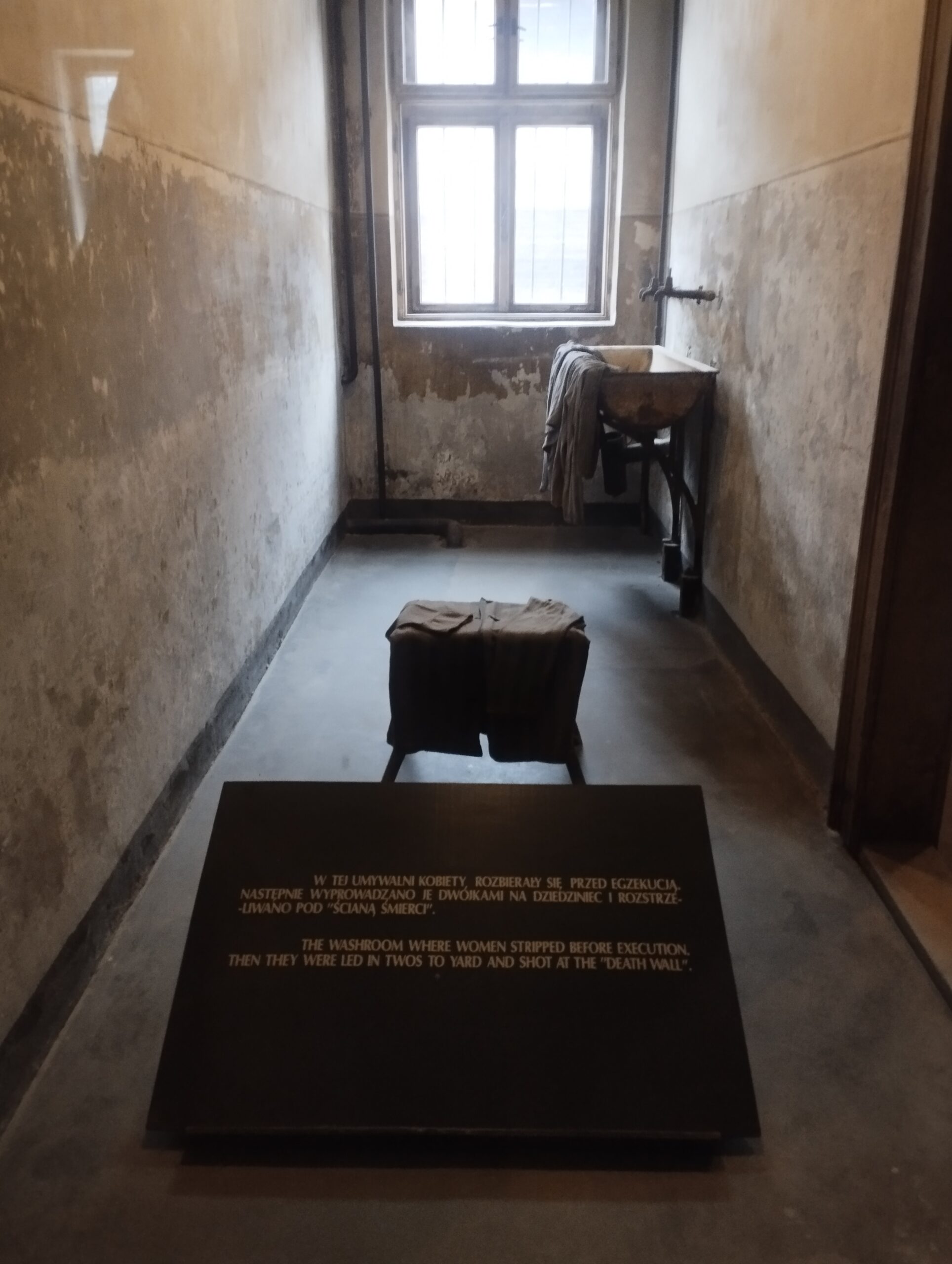
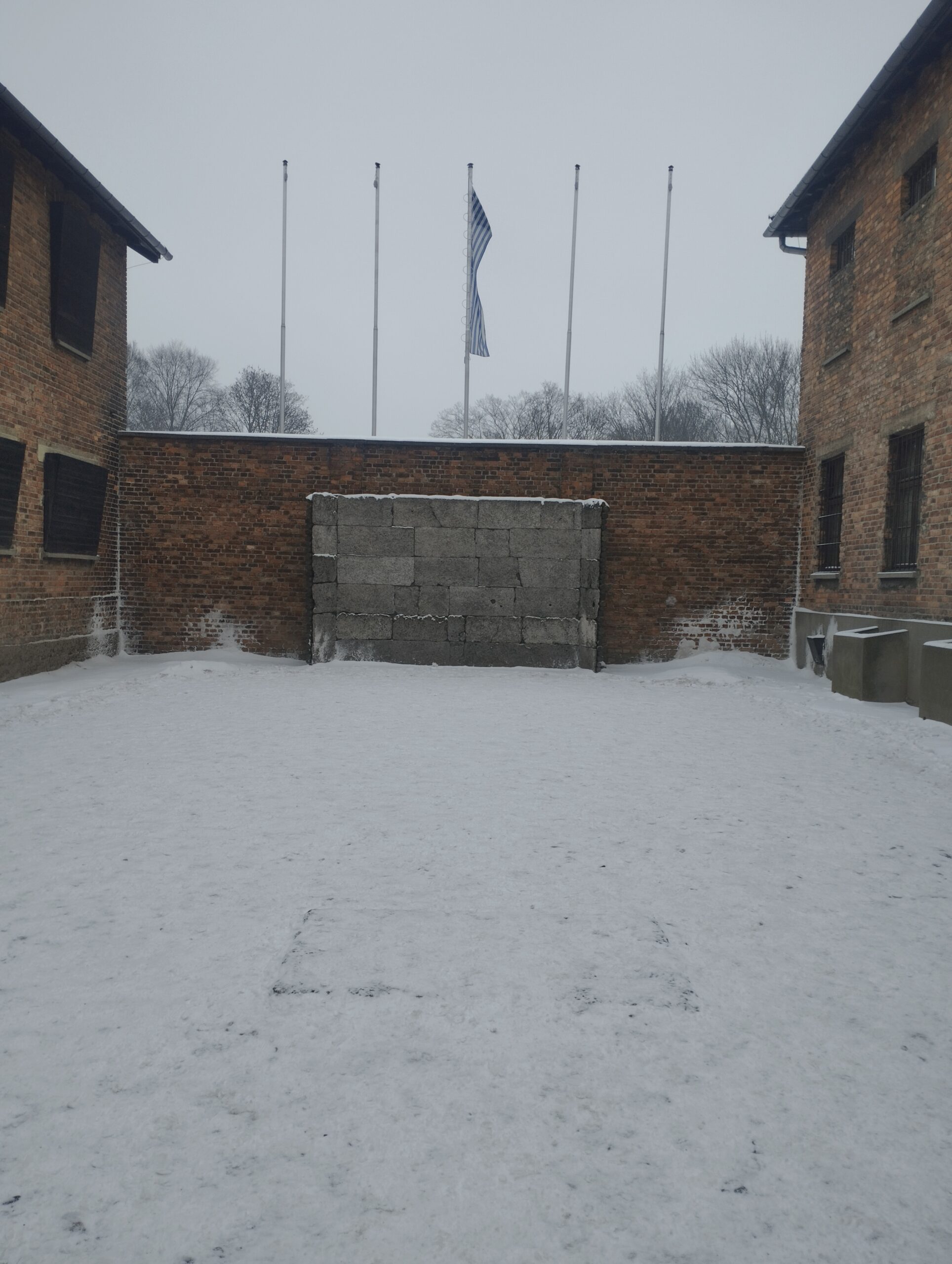
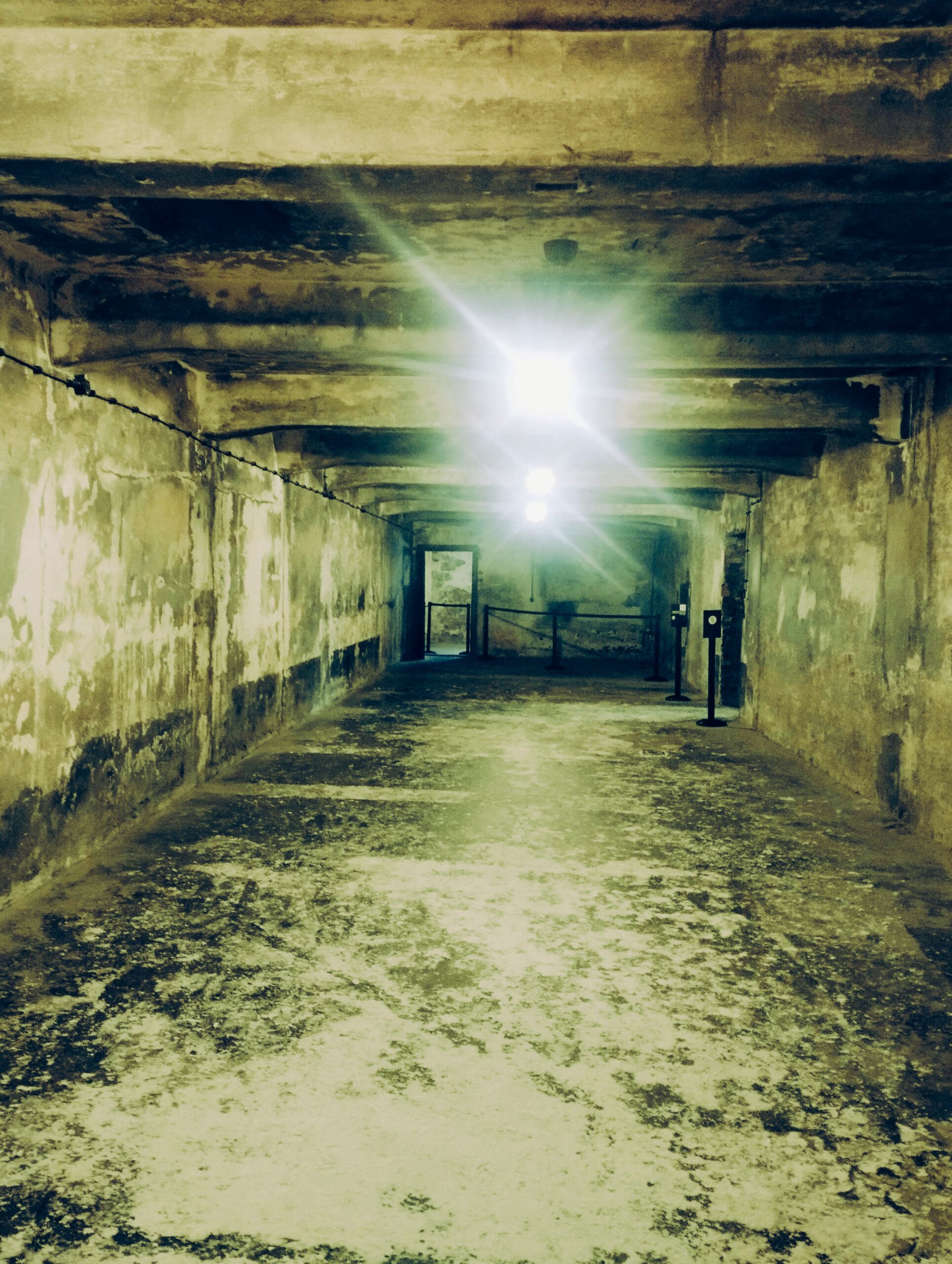
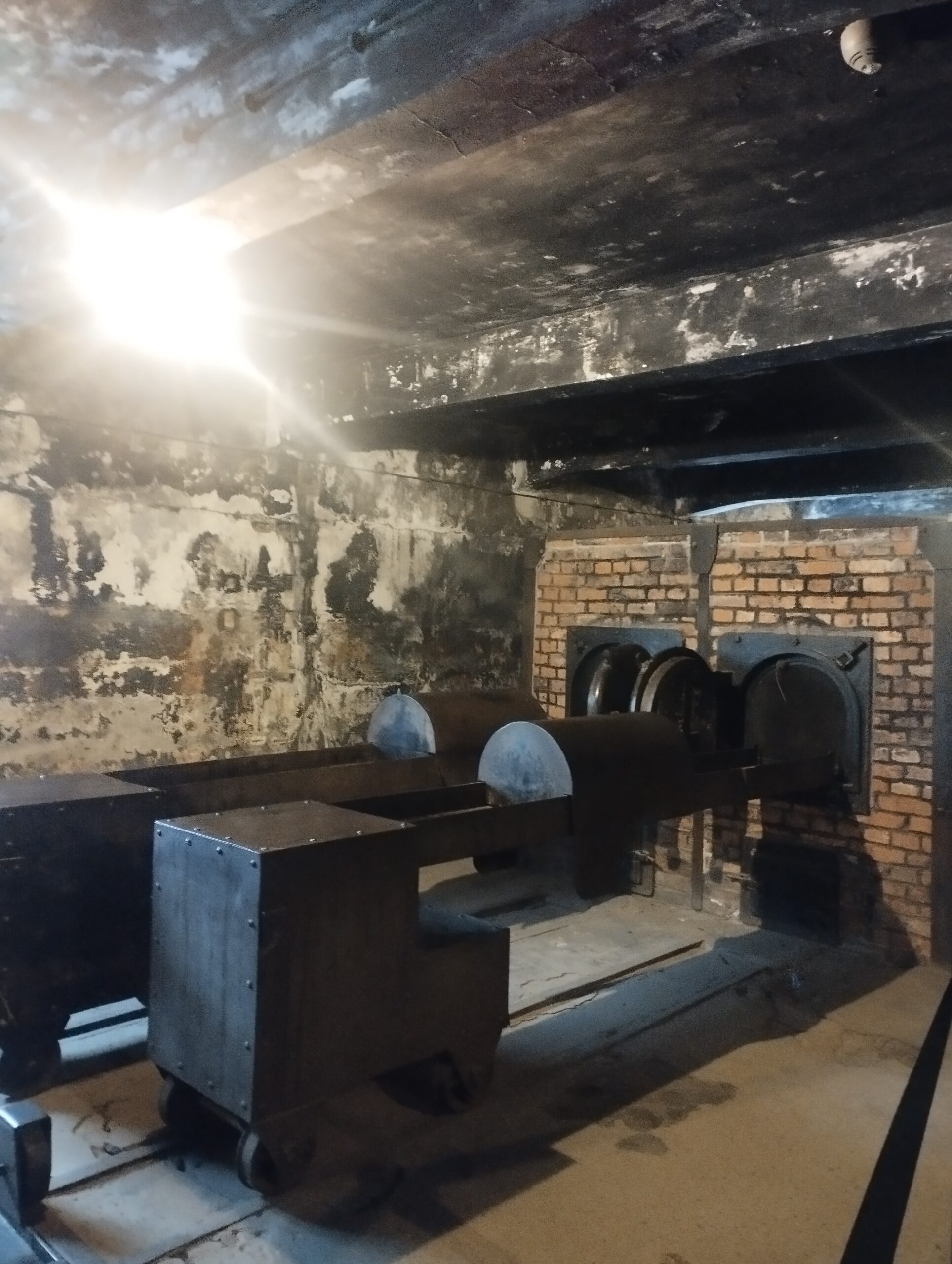
I am now on my way towards the bus which takes you to Auschwitz II-Birkenau (which is some 3 kilometers away), but near the exit there is still one more place of miserable history to see. It’s Crematorium I, the only one still left standing in the entire Auschwitz complex – although this too was dismantled and is now largely reconstructed. Here is the gas chamber you see in modern images – a provisional one, used between 1941 and 1942 – and the ovens were bodies were cremated. The gas chamber has been restored, while the ovens (together with the chimney) have been rebuilt. I have included photographs in the gallery above.
I make my way to the bus station, and hop on the bus. I expect to wait for more people to join. But doors close, and the bus leaves with just me and a couple staff … towards Auschwitz II-Birkenau, 10 minutes away.
AUSCHWITZ II-BIRKENAU
I reach the destination, and the first realization is that the iconic photograph of rail tracks approaching the large brick gate is not actually taken from outside the complex, but from the inside. Of course, I enter the premises and take my own photo. There are a few people leaving, and no one else around.
Suddenly, I am alone … at the Auschwitz II-Birkenau extermination camp.
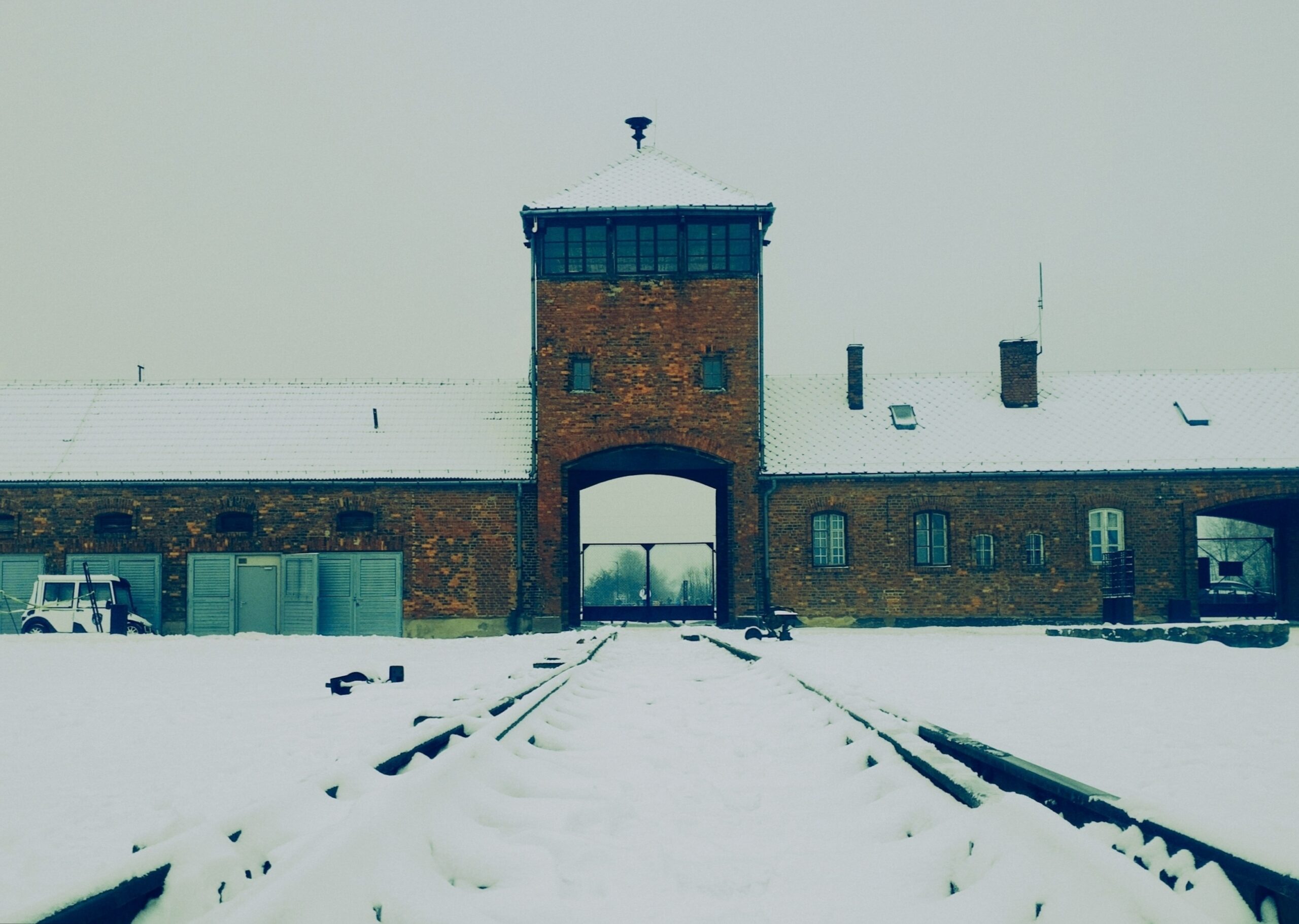
The tracks go deep into the camp and are overlooked by the selection ramp, where Dr. Mengele and SS Officers were making the choice:
Right – life.
Left – death.
Families separated and erased, as tragically recounted in hundreds of memoirs. Uncertainty, confusion, fear. Desperation and pain. And hope, the sweet poison which keeps you sane, so you can suffer more.
I am standing in the footsteps of horror stories. While history may indeed be written by the victors, and certain details can be debated, THIS HAPPENED. To deny the event itself is sheer insanity.
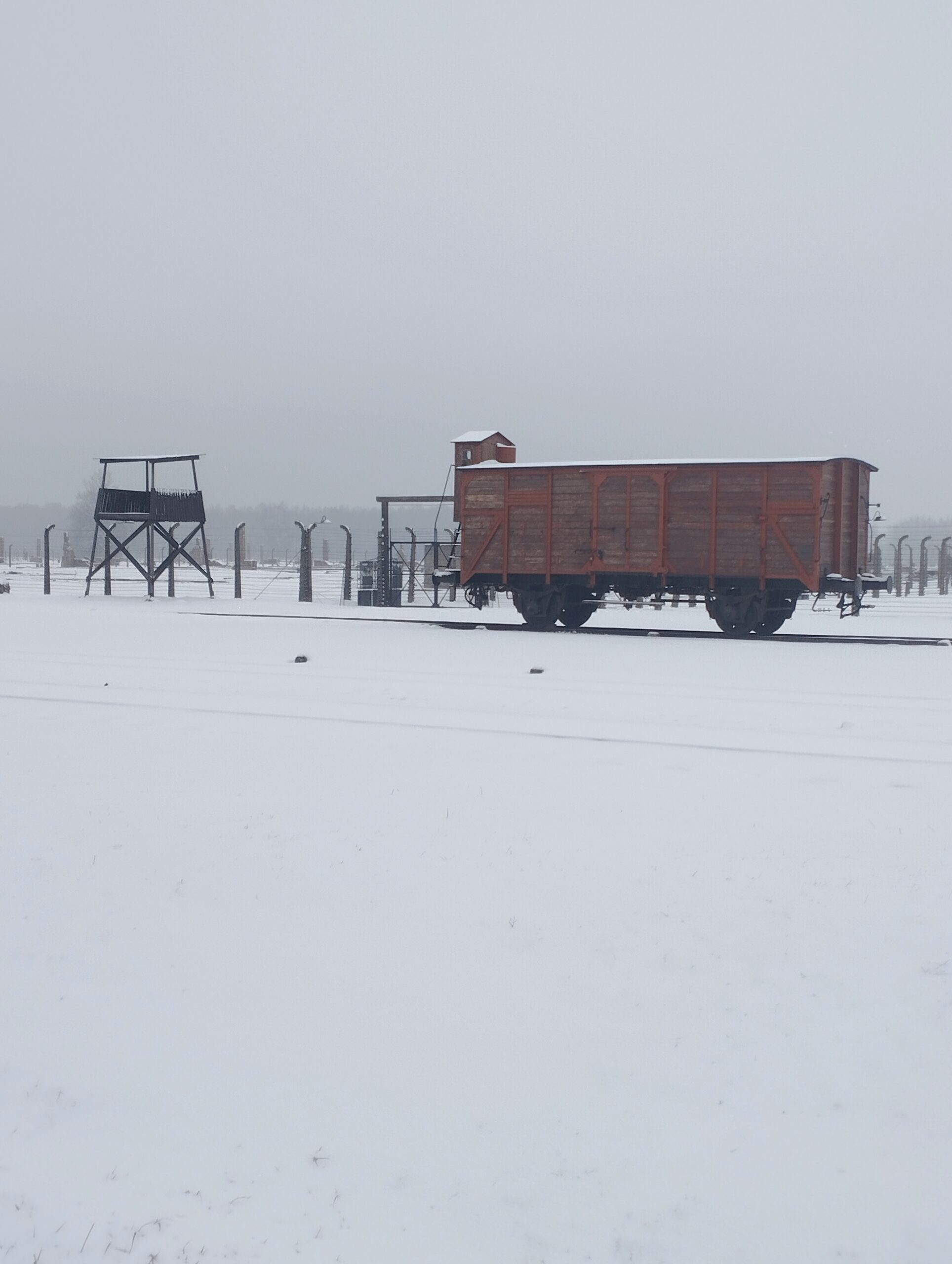
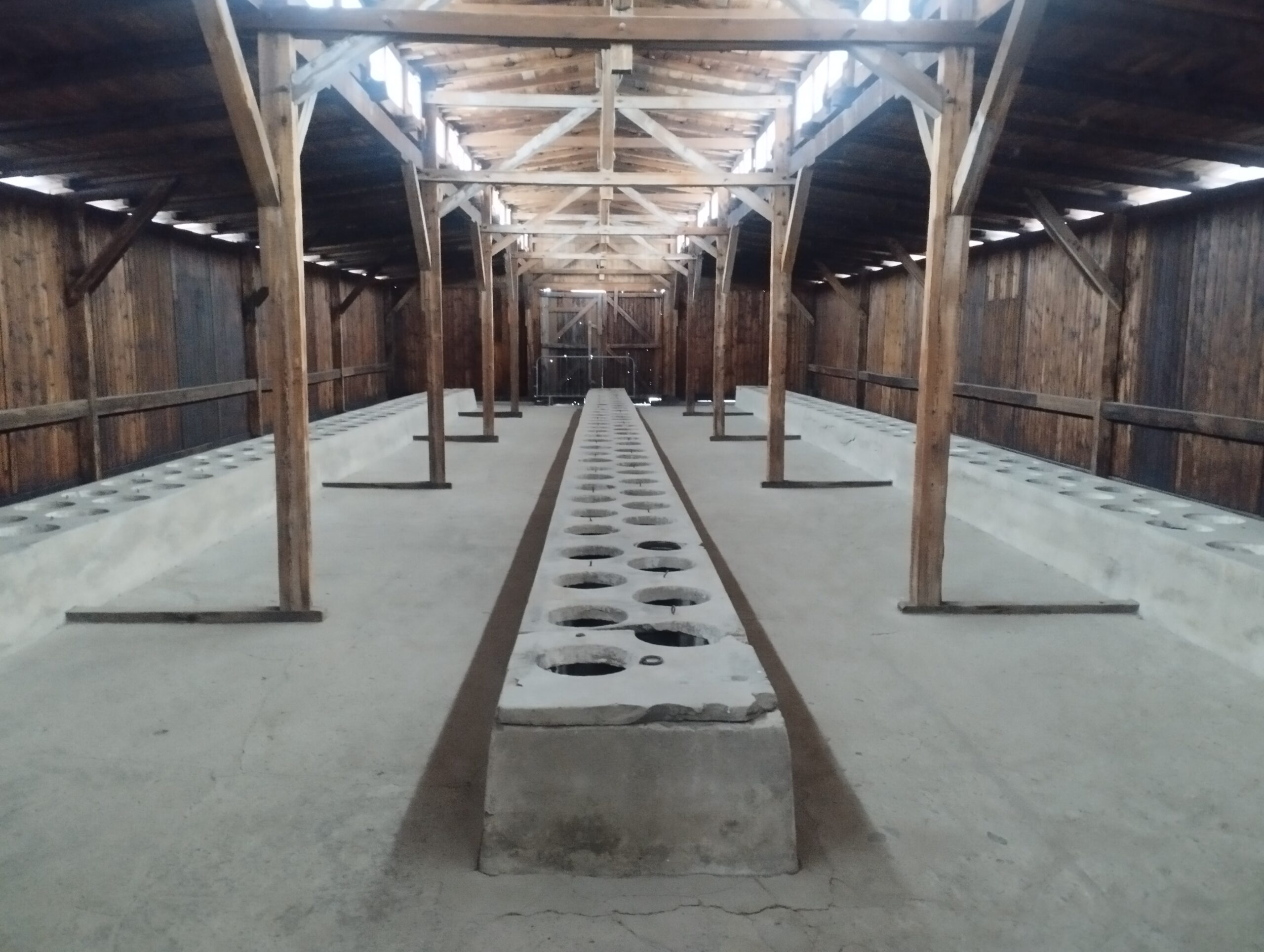
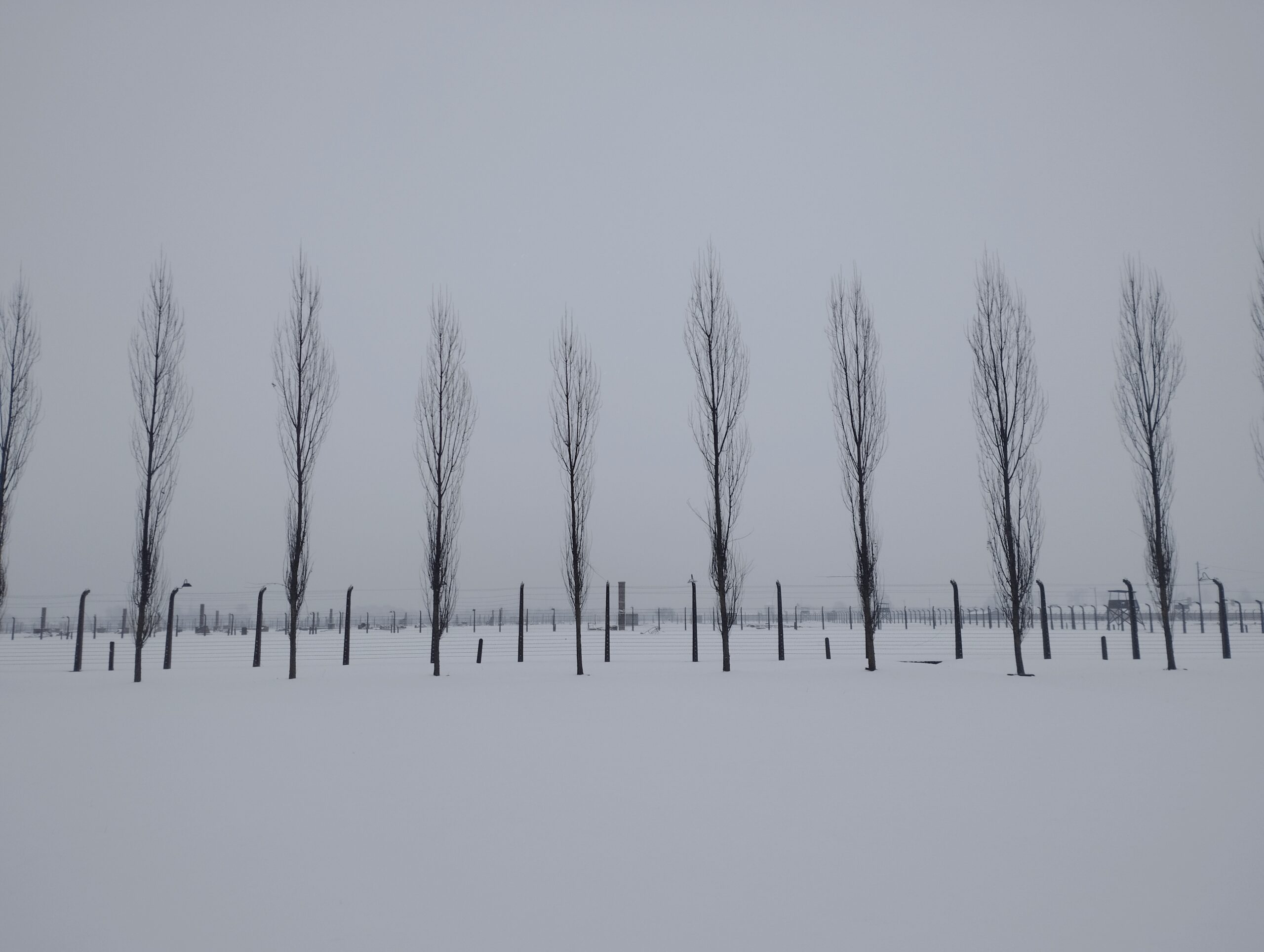
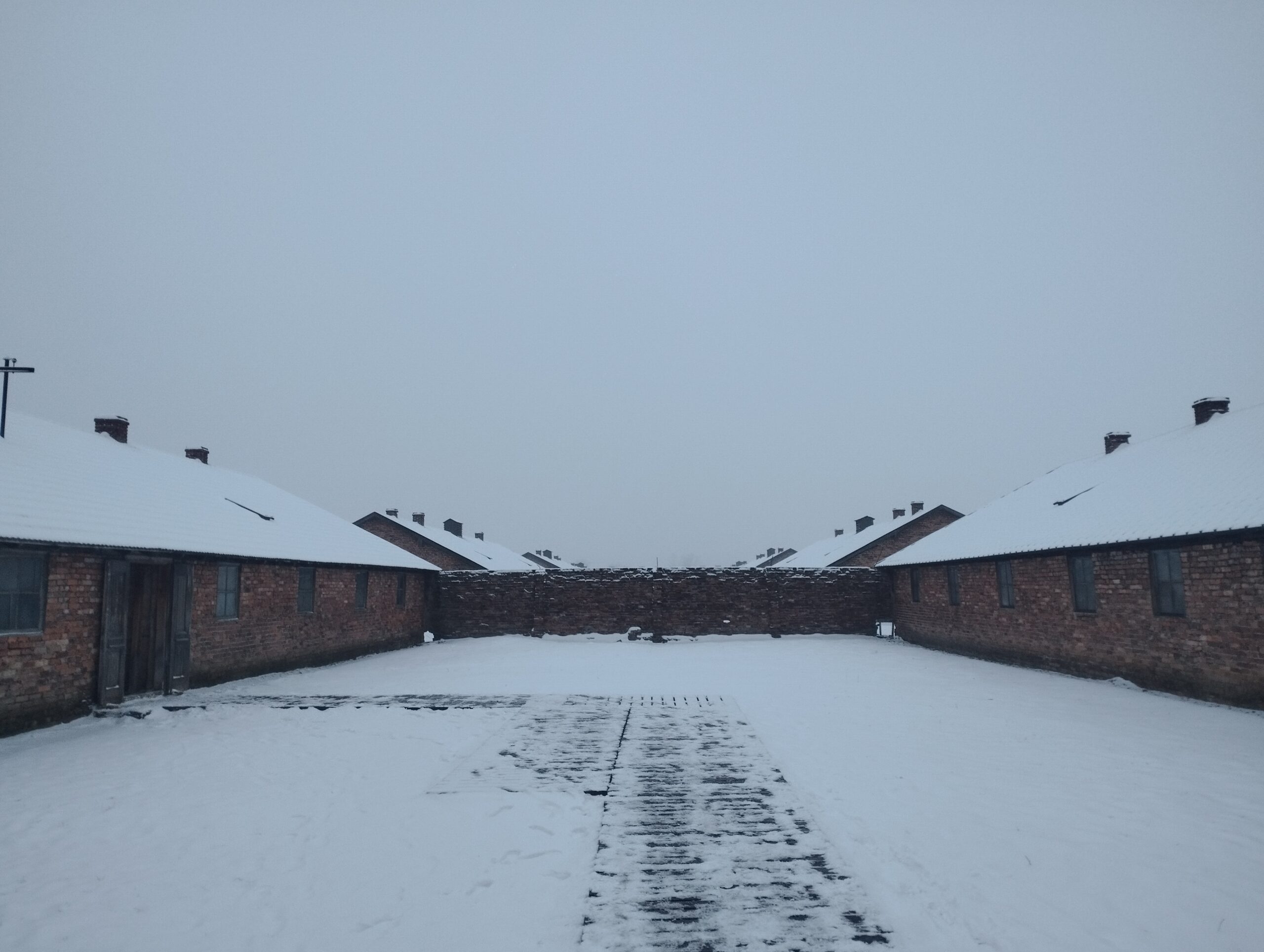
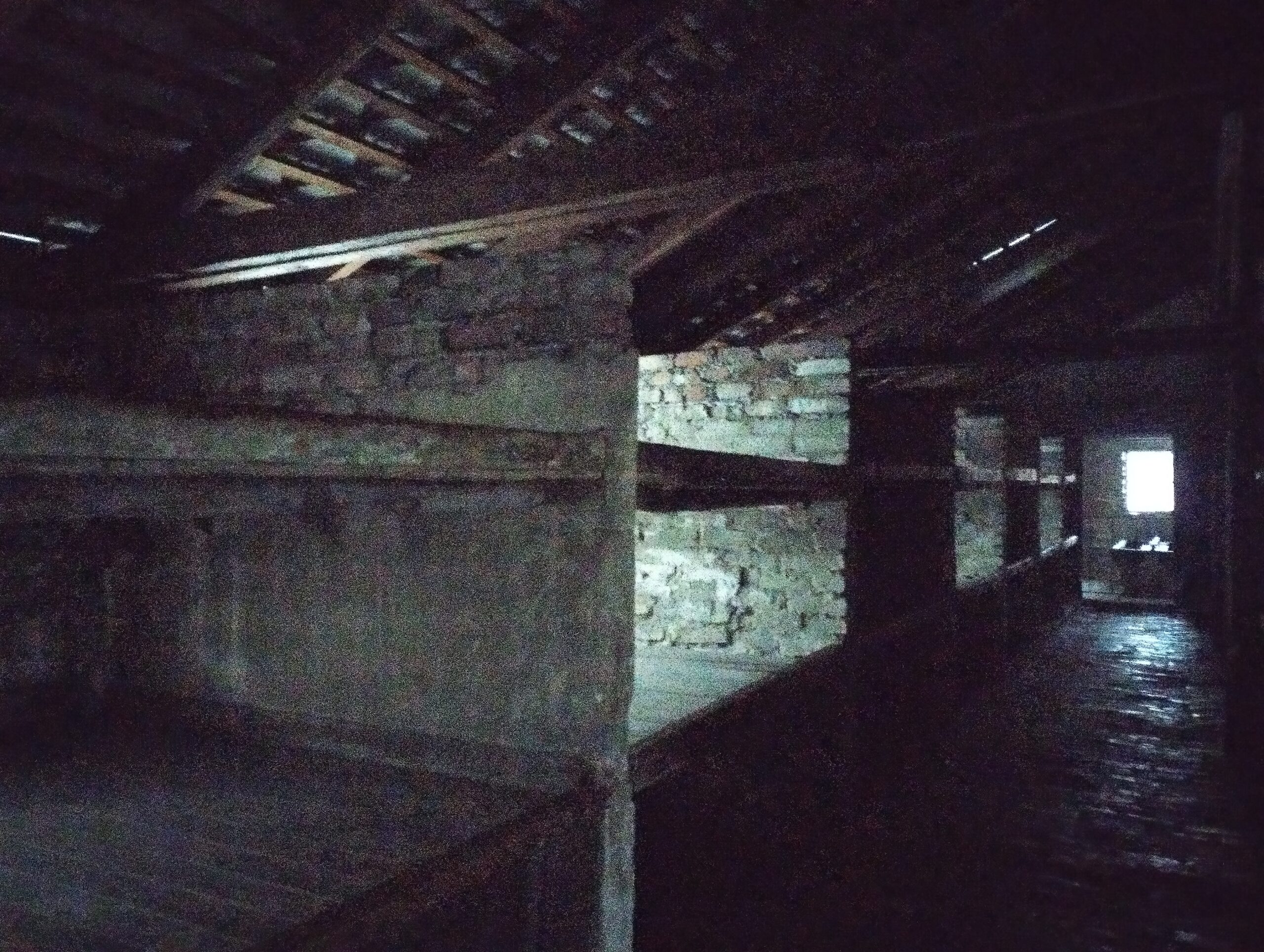
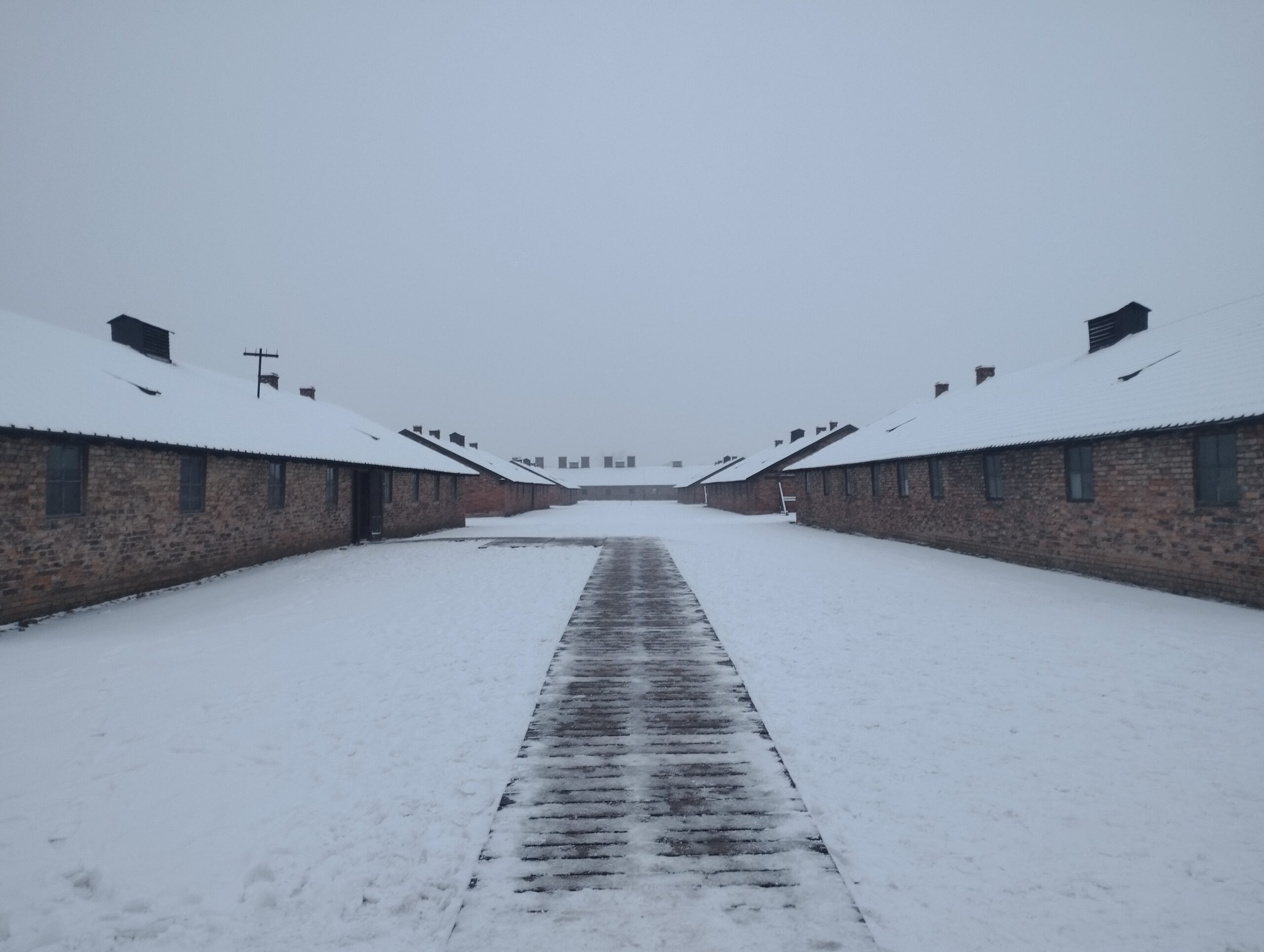
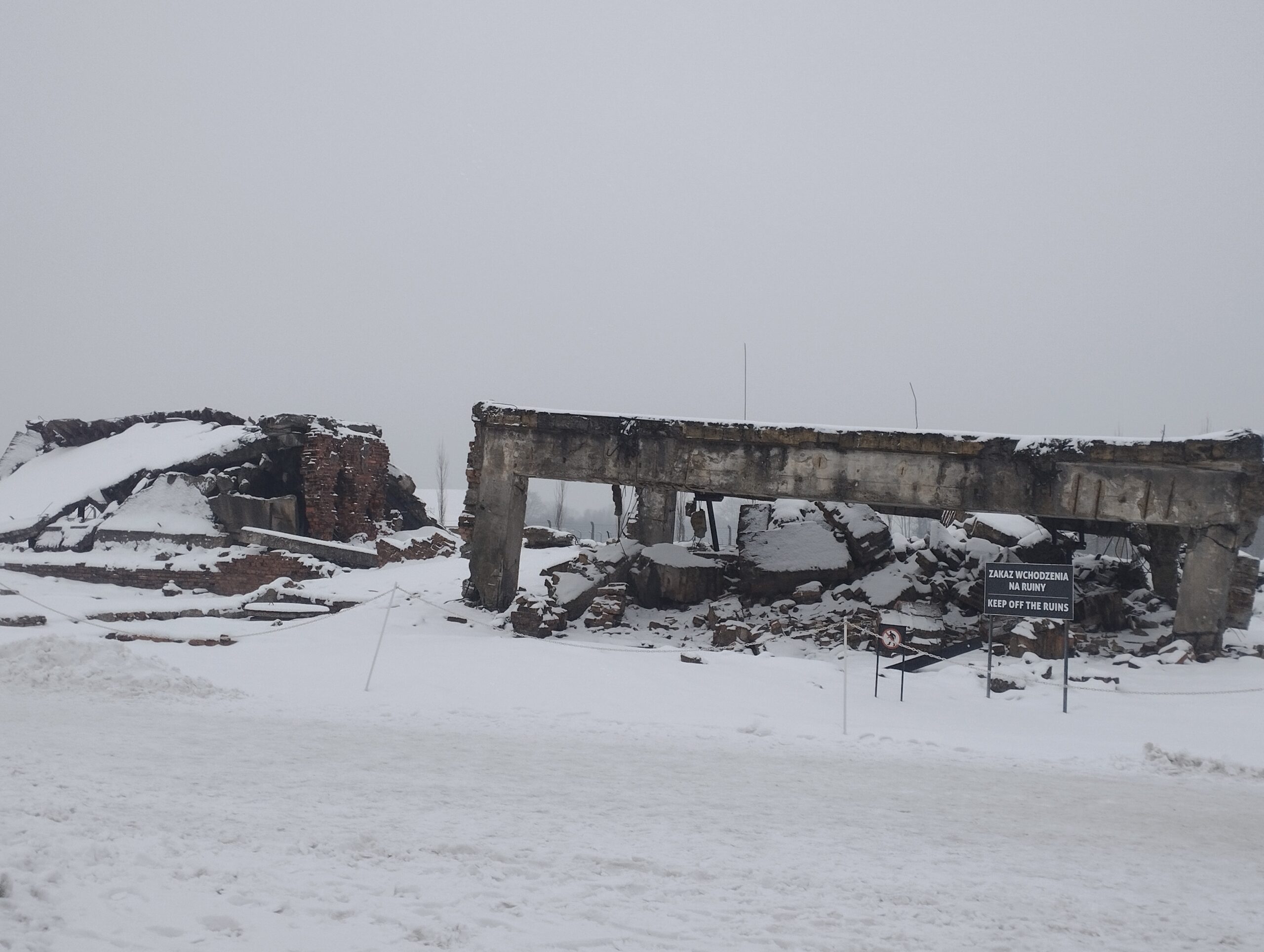
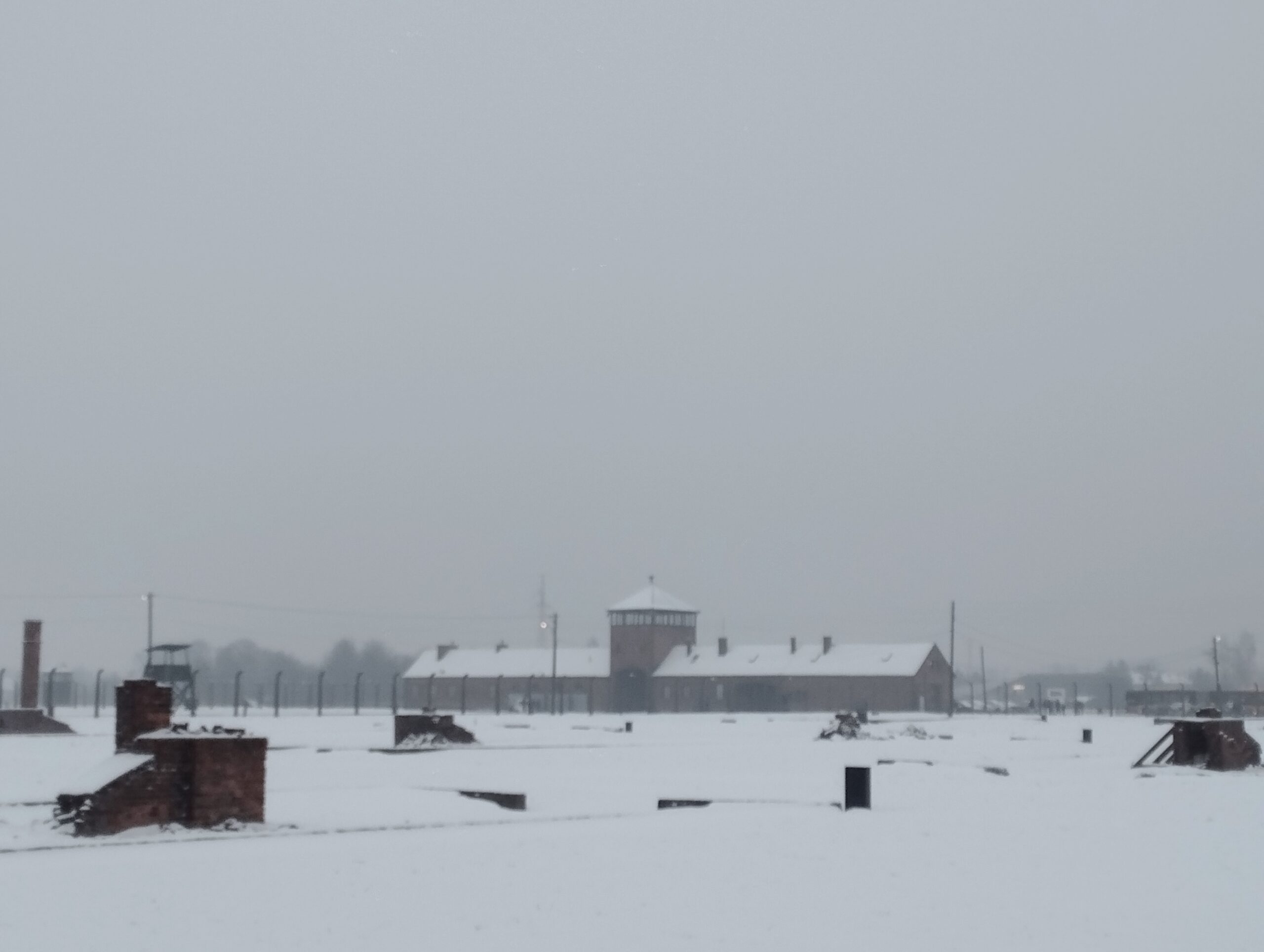
The immensity of Auschwitz II-Birkenau is quite astounding. A vast open space enclosed at the far ends by barbed wire. There’s only snow, bricks and barbed wire, as far as my eyes can see. This truly is the land of barbed wire.
Given that I’m by myself, I decide to put some music on my phone. Relevant music for that era, for Auschwitz. To help me imagine, to help me feel.
Over 100 buildings have survived the passage of time here. Quarantine camps, the Women’s camp, the Terezin Ghetto camp, Gypsies camp, Hungarian camp, Tranzit camps, Children’s barracks. Latrines and washrooms, bathhouses, bunkers, warehouses, kitchens. The infamous Kanada storeroom – which used to be packed with loot confiscated from prisoners – is destroyed, but marked accordingly. The sleeping quarters are as miserable as you would expect.
I reach the far end of the camp, where a monument for the victims, at the end of the rail tracks, is bordered by the ruins of Crematoria IV and V. Information panels describe a place where corpses were burned in open air. There’s another one, were ashes used to be scattered.
I sit there for the better part of an hour, with my thoughts and emotions, in utter silence. How is it possible that no one else is here? I feel lucky to have this authentic experience – although I’m ashamed to frame it as such – and try not to waste it. I’m looking for some kind of depth.
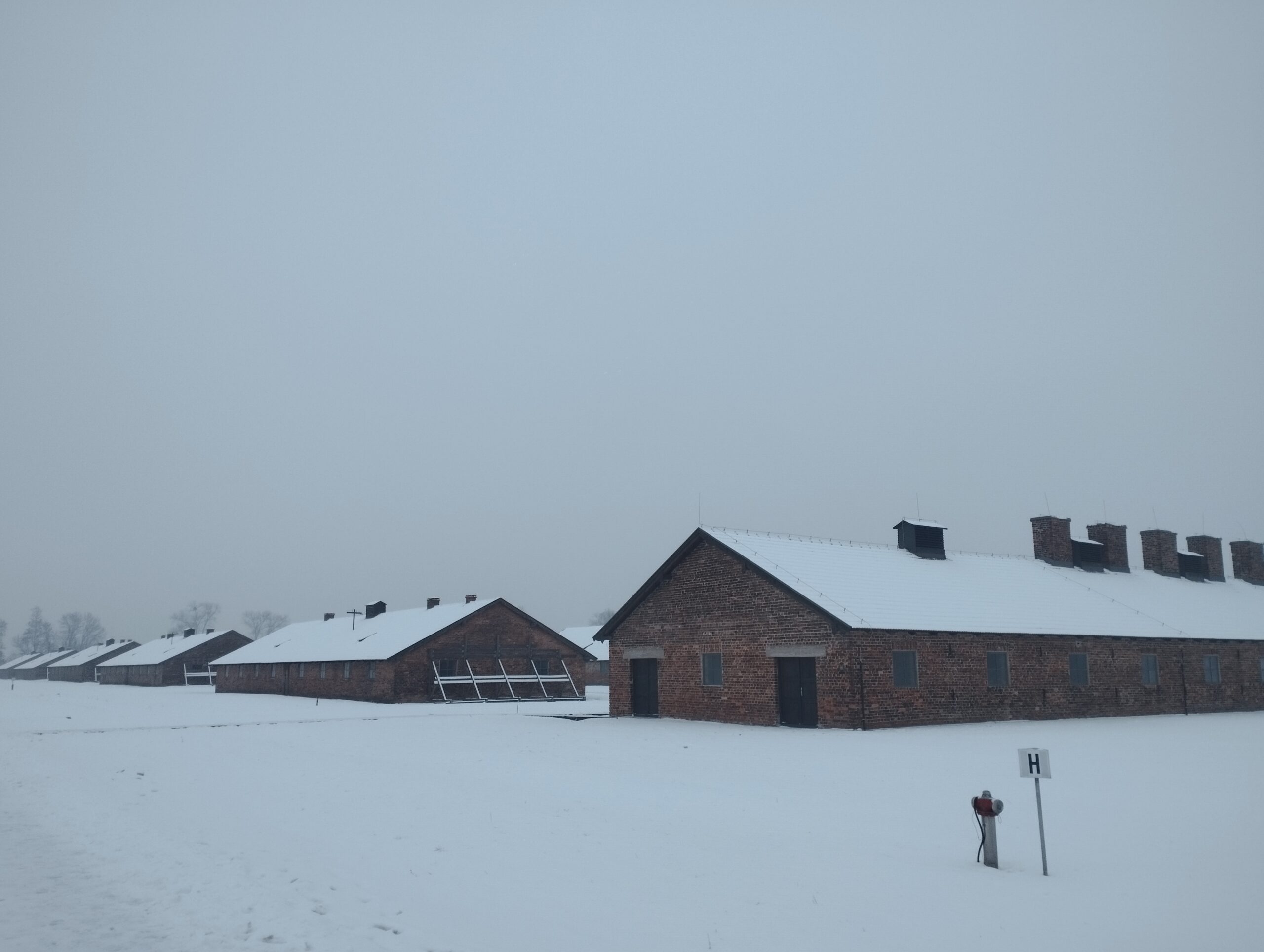
It’s getting dark, my battery is gone, and I reckon I’m the only idiot who could get himself stranded alone at night … in Auschwitz, of all places. I stumble towards the bus station, and there are about a dozen people there to catch the last shuttle. I don’t know where they came from – I haven’t seen a soul over the past three hours. Perhaps I wandered off the beaten path.
I get on the bus and, by the next day, I get on with my life. It’s what we do.
Book suggestions ⤵️
📖 If This Is a Man (Primo Levi, 1947)
📖 By Chance Alone: A Remarkable True Story of Courage and Survival at Auschwitz (Max Eisen, 2016)